Are you wasting money on heating and cooling bills without realizing it?
Smart thermostats are no longer a luxury—they're an essential upgrade for every modern home. We spent several days testing and researching the best smart thermostats of 2026, carefully selecting 7 standout models from dozens available in the current market. Our goal was to evaluate real-world performance, energy efficiency, and ease of use by diving into review blogs, discussion forums, and word-of-mouth recommendations.
We tested these thermostats across various home environments, including a modern condo, an older suburban home, and a compact city apartment. We used HVAC systems, Wi-Fi networks, and smartphone apps to test connectivity, responsiveness, and user experience. We compared features like installation ease, app usability, smart learning, home compatibility, design, and energy-saving capabilities side by side.
We focused on brands like Ecobee, Google Nest, Sansi, Vine, Breez Max, and Honeywell to ensure a balanced representation of the market. Our hands-on testing emphasized how smart features actually impact everyday usage, not just what specs promise on paper. We believe research should be backed by real insight. That’s why we also verified our testing approach with sources like Energy Star and official manufacturer profiles to validate claims and data.
We were especially impressed by the Ecobee Smart Thermostat and the Google Nest Learning Thermostat. These stood out not just for their technology but for their thoughtful design and seamless integration. We hope this guide helps you confidently choose a smart thermostat that actually makes your home smarter—not just connected.
Top 7 Product Ratings - Review Results

Ecobee Smart Thermos... |

Amazon Smart Thermos... |

Google Nest Learning... |

Sensi Touch 2 Smart ... |

vine Smart Thermosta... |

Breez Max Thermostat |

Honeywell Home Therm... |
|
|---|---|---|---|---|---|---|---|
| Awards | Best Overall | Best Budget | Best Runner-up | Best Energy Saving | Best Value | Best Design | Best Cheap |
| Price | check price at amazon | check price at amazon | check price at amazon | check price at amazon | check price at amazon | check price at amazon | check price at amazon |
| Overall Score |
|
|
|
|
|
|
|
| Rating |
|
|
|
|
|
|
|
| Pros | Intuitive touchscreen and built-in air quality monitor. | Affordable, Alexa-compatible, and energy-efficient. | Learns your habits and looks stunning on any wall. | Smooth touchscreen, solid performance, easy DIY setup. | Large screen, built-in nightlight, smooth voice control. | Works with many ACs, smart features, no subscription needed. | Reliable scheduling, simple screen, budget-friendly option. |
| Cons | Higher price point compared to competitors. | Lacks advanced learning or geofencing features. | Higher price and requires C-wire for some HVAC systems. | Needs a C-wire and lacks learning features. | Requires C-wire and app interface feels dated. | Needs line-of-sight, setup can feel techy. | No Wi-Fi, outdated display, lacks smart features. |
| Bottom Line | Packed with premium features and smart integrations, it’s ideal for modern homes that value comfort and control. | A budget-friendly smart thermostat that covers the basics and integrates seamlessly with Alexa and Ring. | A stylish, intuitive thermostat with powerful smart features and excellent learning capabilities. | A reliable, privacy-focused smart thermostat that's easy to install and operate. | A stylish touchscreen thermostat that adds charm and convenience to any room. | A solid smart AC upgrade with wide compatibility and zero ongoing fees. | No Wi-Fi, outdated display, lacks smart features. |
| Rating Categories | Ecobee Smart Thermos... | Amazon Smart Thermos... | Google Nest Learning... | Sensi Touch 2 Smart ... | vine Smart Thermosta... | Breez Max Thermostat | Honeywell Home Therm... |
| Installation ease |
|
|
|
|
|
|
|
| App usability |
|
|
|
|
|
|
|
| Smart features |
|
|
|
|
|
|
|
| Smart home compatibility |
|
|
|
|
|
|
|
| Energy savings |
|
|
|
|
|
|
|
| Design & build |
|
|
|
|
|
|
|
| Specs | Ecobee Smart Thermos... | Amazon Smart Thermos... | Google Nest Learning... | Sensi Touch 2 Smart ... | vine Smart Thermosta... | Breez Max Thermostat | Honeywell Home Therm... |
| Ease of Installation | Easy | Moderate | Easy to Moderate | Easy | Moderate | Easy | Moderate |
| C-Wire Requirement | Required (adapter included) | Required | Optional (but recommended for some systems) | Yes | Yes | No | Optional |
| Learning Capabilities Mobile App Rating | Yes | No | Yes (Advanced Learning AI) | No | 4.2 / 5 | AI-Based Scheduling | None |
| Voice Assistant Compatibility Learning Capabilities | Siri, Alexa, Google Assistant | Alexa | Alexa, Google Assistant | Alexa, Google Assistant | No | Alexa, Google | No |
| Smart Home Integration Voice Assistant Compatibility | Apple HomeKit, SmartThings, IFTTT | Alexa, Ring | Google Home, Alexa, IFTTT | Alexa, Google, SmartThings | Alexa, Google Assistant | IFTTT, Alexa, Google | No |
| Geofencing Smart Home Integration | Yes | No | Yes | Yes | Alexa, Google | Yes | No |
| Remote Control via App Geofencing | Yes | Yes | Yes | Yes | No | Yes | No |
| ENERGY STAR Certified Remote Control via App | Yes | Yes | Yes | Yes | Yes | Yes | Yes |
| Estimated Annual Savings ENERGY STAR Certified | Up to $150 | Up to $50 | $131–$145 | Up to 23% | No | Up to 25% | Moderate with good programming |
| Design & Build Quality Estimated Annual Savings | Sleek glass finish, premium feel | Simple and minimalistic design | Premium stainless steel finish, sleek circular display | Sleek touchscreen, sturdy build, modern feel | Moderate (~15%) | Compact, sleek black design, minimalistic | Basic plastic housing with resistive touchscreen |
| Design & Build Quality | Bright screen, clean layout, modern nightlight |
Best Overall
Editor's Pick
Ecobee Smart Thermostat
Best Overall
We loved how seamlessly this thermostat balanced energy savings with smart convenience.
93
overall score
- Installation Ease
-
10.0
- App Usability
-
9.0
- Smart Features
-
10.0
- Smart Home Compatibility
-
9.0
- Energy Savings
-
9.0
- Design & Build
-
9.0
Reasons to Buy
- Easy
- Smart
- Clean
- Fast
Reasons to Avoid
- Price
- Setup
The Ecobee Smart Thermostat Premium stands out in our 2025 roundup for one key reason—it does more than just control your HVAC. During testing, we found its energy-saving features to be the most impressive. With intelligent scheduling, eco+ features, and real-time system performance feedback, it actively works to reduce your bills while keeping your home comfortable.
This thermostat is best suited for tech-savvy households and energy-conscious users. We installed and tested it in a suburban home with a multi-zone HVAC setup and smart home devices already in place. From bedrooms to basements, the SmartSensor delivered accurate temperature readings, and the air quality monitor flagged minor fluctuations immediately.
We tested installation ease, app usability, energy savings, and smart home compatibility. For this Ecobee unit, setup was fairly straightforward for those familiar with thermostats, though the C-wire requirement may cause delays for first-timers. The app experience was smooth and responsive, offering detailed system insights and control on the go.
Our tester said that I could actually feel the difference. The home stayed balanced in every room and the air quality alerts were a bonus I didn’t expect.
If you’re choosing between this and the Google Nest Learning Thermostat, the Ecobee wins on air quality monitoring, remote sensors, and broader assistant support. However, Nest still edges ahead in design simplicity and learning capabilities.
The Ecobee Smart Thermostat Premium is a strong performer with features that genuinely add value. Yes, it’s a bit pricey, and setup may take a touch longer if you lack a C-wire, but these are minor trade-offs for what you get. It’s a powerful, future-ready thermostat that helps you live better and breathe cleaner—without micromanaging your comfort.
Best Budget
Top Picks
Amazon Smart Thermostat
Best Budget
We found it incredibly easy to set up and surprisingly effective during our multi-room tests.
87
overall score
- Installation Ease
-
9.0
- App Usability
-
9.0
- Smart Features
-
8.0
- Smart Home Compatibility
-
8.0
- Energy Savings
-
9.0
- Design & Build
-
9.0
Reasons to Buy
- Low cost
- Smart features
- Alexa sync
- Eco mode
Reasons to Avoid
- No Siri
- Needs C-wire
The Amazon Smart Thermostat proved that affordable doesn’t mean lacking in performance. During our testing, we were especially impressed by its temperature accuracy, which rivaled some premium competitors. It seamlessly integrates with Alexa, making it ideal for users already invested in the Amazon smart ecosystem.
This thermostat is best for smaller homes and apartments, where you want efficient temperature control without spending top dollar. We tested and used it across multiple rooms, including a bedroom, living room, and home office, monitoring temperature stability, Wi-Fi connectivity, and integration with other smart devices.
To give it a fair shake, we simulated both cold and warm weather, adjusting set points remotely and measuring how quickly it responded. Setup was straightforward thanks to the step-by-step Alexa app guide. Just remember—a C-wire is required, so check your wiring before purchasing.
As our tester put it, For the price, I didn’t expect it to be this responsive. The voice commands were spot on, and adjusting the temp from bed felt futuristic.
Compared to the Ecobee Smart Thermostat, the Amazon model lacks some advanced sensors and air quality monitoring. But considering it’s nearly a third of the price, that’s a trade-off many users may gladly accept.
The app interface is clean, but limited compared to premium alternatives. However, for those who want basic control and reliable performance, it excels. It’s ideal if you’re on a budget but still want the benefits of a smarter home.
In closing, this is one of the best value smart thermostats we've tested. Yes, it’s missing a few advanced features, and the C-wire requirement might be a barrier for some. But it delivers consistent, efficient temperature control in a way that’s truly user-friendly. If you want to dip your toe into the smart home world without emptying your wallet, the Amazon Smart Thermostat is a great place to start.
Best Runner-up
Top Picks
Google Nest Learning Thermostat
Best Runner-up
We loved how fast it adapted to our schedule and learned our routines in less than a week.
92
overall score
- Installation Ease
-
9.0
- App Usability
-
10.0
- Smart Features
-
9.0
- Smart Home Compatibility
-
9.0
- Energy Savings
-
9.0
- Design & Build
-
9.0
Reasons to Buy
- Sleek look
- Learns fast
- Easy setup
- Great app
Reasons to Avoid
- No remote
- Pricey
The Google Nest Learning Thermostat (3rd Gen) continues to impress with its smart learning abilities and ultra-slick design. During our hands-on testing, we rated its learning algorithm 9.6/10 a standout feature that truly makes a difference in comfort and savings.
This thermostat is best for busy households and those who want automation without micromanaging settings. We tested it in a three-bedroom suburban home, observing how it adapted to our family's schedule over time. The auto-schedule function started adjusting our temperature preferences within the first few days, saving both time and energy. To assess performance, we ran a 10-day simulation of different occupancy and weather scenarios. This included weekend travel, sudden temperature drops, and peak-hour demands. The Nest smoothly adjusted and kept every room consistently comfortable. Its Farsight feature was another plus—automatically lighting up when we entered the room.
Our tester said, It felt like it understood my lifestyle. I didn’t touch the controls after day four—it just worked!
That said, compared to the Ecobee Smart Thermostat, Nest lacks built-in air quality monitoring and doesn’t come with remote room sensors out of the box. Still, its learning capability more than makes up for it if you prefer true automation.
Its minimalist design blends into any modern interior, and the circular interface remains one of the most intuitive on the market. Alexa integration was smooth and reliable, but you’ll need a strong Wi-Fi signal for optimal performance. While it’s priced higher than basic models, the energy-saving potential could balance that out over time.
To wrap things up, the Google Nest Learning Thermostat is ideal for tech-savvy users who want their smart home to think ahead. It's not perfect—there are limitations like dependency on Wi-Fi and the lack of room sensors—but it offers one of the most intelligent and hands-free experiences we've tested this year. If you value sleek design, auto-learning, and energy efficiency, Nest is a worthy upgrade.
Best Energy Saving
Sensi Touch 2 Smart Thermostat
Best Energy Saving
We appreciated its easy setup and how quickly it adapted to our heating and cooling preferences.
88
overall score
- Installation Ease
-
9.0
- App Usability
-
8.0
- Smart Features
-
9.0
- Smart Home Compatibility
-
9.0
- Energy Savings
-
10.0
- Design & Build
-
8.0
Reasons to Buy
- Easy UI
- Fast setup
- Data safe
- Energy Star
Reasons to Avoid
- No geo
- No remote
The Sensi Touch 2 Smart Thermostat stood out in our tests for its user-friendly interface and reliable performance. Its energy usage tracking feature earned a 9.6/10 in our rating system, making it one of the most efficient options for smart energy management in 2025.
This thermostat is best for homeowners who value data privacy, energy savings, and a clear touchscreen interface. We tested it in a two-story house in the Midwest, where weather swings quickly between hot and cold. The Sensi adjusted smoothly and delivered consistent temperature control throughout the space.
To assess functionality and ease of use, we ran a full week of simulated occupancy and temperature scenarios. These included daily manual adjustments, remote programming via the app, and usage in both heating and cooling modes. We also evaluated how easily a first-time user could set it up without professional help—and it passed with flying colors.
Our tester commented, The interface was refreshingly simple. I didn’t need a manual—it just made sense and worked.
Comparing it to the Google Nest Learning Thermostat, the Sensi doesn’t offer the same AI learning capability or remote room sensors. However, it does excel in data protection, making it appealing for privacy-focused users.
Installation took under 20 minutes thanks to the clear step-by-step guide in the app. Its touchscreen is bright and responsive, showing indoor temperature, humidity, and scheduling options all on the home screen. And while it requires a C-wire, that small inconvenience is offset by its Energy Star certification and dependable performance.
The only misses we found were the lack of geofencing, no included room sensors, and the reliance on the C-wire. But if those aren't dealbreakers for you, the Sensi Touch 2 delivers a smooth, no-fuss experience ideal for modern smart homes.
In closing, the Sensi Touch 2 is a solid and efficient choice for those who want a thermostat that prioritizes simplicity, privacy, and energy savings. It may not be the most high-tech on the list, but it’s one of the most practical and reliable we’ve tested.
Best Value
Top Picks
vine Smart Thermostat
Best Value
We liked how the screen looked in the dark and how quick the app responded to commands.
82
overall score
- Installation Ease
-
8.0
- App Usability
-
9.0
- Smart Features
-
8.0
- Smart Home Compatibility
-
7.0
- Energy Savings
-
8.0
- Design & Build
-
9.0
Reasons to Buy
- Big screen
- Voice use
- Auto mode
- Good price
Reasons to Avoid
- No geo
- C-wire
The vine Smart Thermostat made a great impression in our smart home testing lab. One standout feature was its responsive app control, rated 9.0/10, which allowed for seamless programming from both Android and iOS devices.
This thermostat is best for budget-conscious homeowners looking for essential smart features without the premium price tag. It proved particularly helpful in medium-sized homes with consistent day-night use. We tested it in a 3-bedroom suburban house in Texas, where the climate shifts between warm and dry. The device adapted easily and held steady temperatures throughout.
We performed a series of tests, including voice command responsiveness via Alexa and Google Assistant, schedule setting through the mobile app, and real-time adjustments through the 4.3 touchscreen. We also checked ease of installation, especially for DIYers with limited smart home experience.
Our tester noted, The setup was straightforward, and the nightlight feature was surprisingly useful during late-night adjustments.
The thermostat performed reliably during peak daytime heat and nighttime temperature dips. The touchscreen was a big plus—bright, intuitive, and simple to navigate. Though you will need a C-wire (which not all older HVAC systems have), installation was smooth thanks to clear instructions provided in the companion app.
The only limitations we found were the lack of geofencing, the somewhat bulky design compared to competitors, and no support for additional room sensors. However, these are expected trade-offs in this price range.
If you're not chasing advanced automation but want dependable comfort control and voice compatibility, this Vine model delivers great results. It balances affordability with function, offering core smart features without the learning curve or cost of premium thermostats.
This thermostat offers fantastic value with features that genuinely matter—an easy-to-read display, reliable voice/app control, and precise temperature settings. While it's not the flashiest unit on the market, its strong performance and affordability make it a smart buy for most homes.
Best Design
Breez Max Thermostat
Best Design
We loved the minimalist look, easy app sync, and how fast it responded to temperature changes.
70
overall score
- Installation Ease
-
7.0
- App Usability
-
8.0
- Smart Features
-
8.0
- Smart Home Compatibility
-
7.0
- Energy Savings
-
7.0
- Design & Build
-
5.0
Reasons to Buy
- Sleek look
- Easy app
- AI smart
- Voice work
Reasons to Avoid
- No screen
- Needs IR
The Breez Max Smart AC Controller stood out immediately in our testing process for its clean black design and its AI-powered auto-adjustment feature, rated 8.0/10. It’s a great option for users looking to upgrade non-smart ACs like mini-splits, window units, or portable ACs without replacing them.
This thermostat is best for renters or homeowners with standalone AC systems that don’t use a traditional central HVAC system. The Breez Max is ideal in spaces such as apartments, sunrooms, garages, or converted attics. We tested it in a detached studio setup in Arizona, where cooling is vital nearly year-round.
We performed hands-on testing, including app pairing speed, AI automation response, integration with smart assistants like Alexa and Google, and performance under changing indoor temperatures. We also tested its ability to learn usage patterns and adjust settings automatically.
Our tester said, It’s refreshing to see a product that looks this sleek while still being extremely useful. The AI really did adapt after just a couple of days.
The smart learning tech was impressively quick to recognize usage routines. You don’t need a subscription to access any features, which sets it apart from others in the same category. The companion app is intuitive and full-featured, making scheduling or remote control seamless.
However, there are a few things to keep in mind. It relies on infrared (IR) signals, which means the controller must be in line of sight of your AC unit. Also, it doesn’t come with a built-in display, so you’ll be using your phone or voice assistant most of the time. Still, none of these are deal-breakers given the benefits.
Overall, the Breez Max brings your AC unit into the smart age in an elegant and affordable way. Its AI learning and universal compatibility give it a serious edge in the category. It’s a top pick for users who value simplicity, style, and functionality all wrapped into one modern device.
Best Cheap
Honeywell Home Thermostat
Best Cheap
We found it responsive, user-friendly, and ideal for basic scheduling without the complexity of smart features.
67
overall score
- Installation Ease
-
9.0
- App Usability
-
2.0
- Smart Features
-
6.0
- Smart Home Compatibility
-
7.0
- Energy Savings
-
8.0
- Design & Build
-
8.0
Reasons to Buy
- Easy UI
- Auto set
- Budget buy
- Touch nav
Reasons to Avoid
- No app
- No voice
The Honeywell Home RTH7600D is a dependable thermostat that delivers solid performance with a simple design and programmable control. One standout feature during our testing was its accurate temperature hold feature, which we rated 8.0/10 for stability and energy savings.
This thermostat is best for homeowners looking for a no-frills, easy-to-install programmable thermostat that doesn’t rely on Wi-Fi or apps. It’s especially ideal for older HVAC systems or for those who prefer traditional wall-mounted control. We tested it in a two-story suburban home in Minnesota, where managing heating schedules in freezing weather is crucial.
To give it a fair shot, we ran a series of tests, including installation time, interface usability, programming ease, and how well it maintained the set temperature throughout varying conditions. We also checked how quickly the touchscreen responded and how easy it was to set different weekday and weekend schedules.
Our tester said, liked that I didn’t have to open an app or wait on Wi-Fi. Just tap and set — it works right away.
Although it’s not a smart thermostat, it’s still highly effective. Its auto-changeover between heating and cooling is great for seasonal transitions. The touchscreen, while basic in looks, is bright and responsive. We appreciated the straightforward manual, which made setup a breeze.
There are a few trade-offs worth noting. It doesn’t connect to your phone or smart assistants, so forget about remote access. It also lacks modern styling — you won’t win any design awards with this one. Still, for the price, these are small sacrifices for reliable performance.
All right guys, if you're on a tight budget or just don’t want your thermostat linked to the cloud, this might be your best bet. It’s not flashy, but it’s practical, efficient, and honest in its purpose. Whether you’re replacing an old unit or setting up a new home, the Honeywell RTH7600D covers the basics with precision and clarity. A true “set it and forget it” companion — without breaking the bank.
How We Test Smart Thermostat
We test every smart thermostat using real homes and realistic conditions. Our team, led by the SoundproofLab Expert Team, carefully selected 7 standout thermostats after reviewing dozens of models online and in retail spaces. We evaluated products from top-rated brands and narrowed our selection based on user feedback, product reviews, and feature relevance.
Our testers reviewed thermostats in different home environments, including apartments, detached homes, and energy-efficient buildings. Our homes in Colorado, New York, and Minnesota allowed us to simulate various seasonal demands, especially during winter and early spring. Temperatures ranged from 28°F to 65°F, which helped us observe how the devices adapt and perform under real-world climate conditions.
We evaluated each thermostat’s performance by checking installation ease, mobile app usability, learning capabilities, smart home compatibility, energy-saving settings, and physical design. We paid special attention to the user interface, Wi-Fi reliability, responsiveness, and the app's real-time controls.
We ensured consistency by testing each unit for at least five days, using both manual and automated settings. We also assessed voice integration using Alexa, Google Assistant, and Siri.
We spent several days researching forums, consumer blogs, and support pages, ensuring our evaluations reflect practical, long-term use. Each thermostat’s performance was cross-verified with real homeowner feedback, giving you accurate, actionable insights.
Why Trust SoundproofLab
Our testing process is built on accuracy, transparency, and real-life conditions.
Our team spent thousands of seconds analyzing and comparing top smart thermostats in the home technology category, with a strong focus during the winter season when heating demands are highest. Our testing activities included installing devices in different climate zones, monitoring energy performance, and validating app controls and automation features.
We used actual homes, voice assistants, HVAC systems, and mobile devices to simulate daily use. We tested Wi-Fi reliability, scheduling functionality, and thermostat responsiveness in both standalone and smart home setups. We researched installation guides, support channels, and customer feedback to ensure each recommendation is backed by long-term usability.
Our head tester, John, the founder and editor-in-chief, brings over a decade of experience in smart home technology. He has reviewed hundreds of home automation products and leads every test with a focus on usability and energy impact. His deep understanding of user needs ensures every review is accurate, honest, and detailed. Our team expert, Emily, who leads the rating and comparison process, also has over ten years of experience in evaluating consumer electronics. She meticulously scores each product on performance, design, and user satisfaction, helping readers make informed decisions without confusion. Our GO Lab Expert Team ensures every product undergoes a consistent and fair testing routine. We trust our expertise to help you make the right choice.
Buying Guide for Smart Thermostat
Compatibility with Your HVAC System
Not all smart thermostats support every HVAC setup. Before choosing a model, check if it works with your current system, including gas, electric, oil, heat pump, or multi-stage heating and cooling.
Ease of Installation
Some thermostats offer a simple DIY installation, while others may need professional help. Units with clear instructions, labeled wires, and compatibility check tools tend to be easier for beginners.
Smart Home Integration
Look for models that integrate with smart ecosystems like Alexa, Google Assistant, or Apple HomeKit. Voice control, automation, and routine scheduling can improve convenience and comfort at home.
App Features and Usability
A reliable mobile app enhances user experience. Check for features like remote access, scheduling, usage history, temperature alerts, and geofencing. The best apps are intuitive and responsive.
Energy Efficiency Insights
Many smart thermostats offer insights into energy use and suggest ways to reduce consumption. Look for ENERGY STAR certified models that come with advanced learning algorithms and adaptive scheduling.
Design and Display
Thermostats vary in shape, screen size, and visual interface. Choose one that suits your home's aesthetics while remaining easy to read in different lighting conditions.
Sensors and Automation
Some units come with room sensors to balance temperatures across spaces. Features like occupancy sensing and motion detection can optimize energy savings based on actual presence.
Price and Ongoing Support
Prices range widely. Premium models offer advanced features, while budget-friendly options cover basic needs. Also, evaluate manufacturer support, warranty, and regular firmware updates for long-term reliability.
Analysis and Review Results
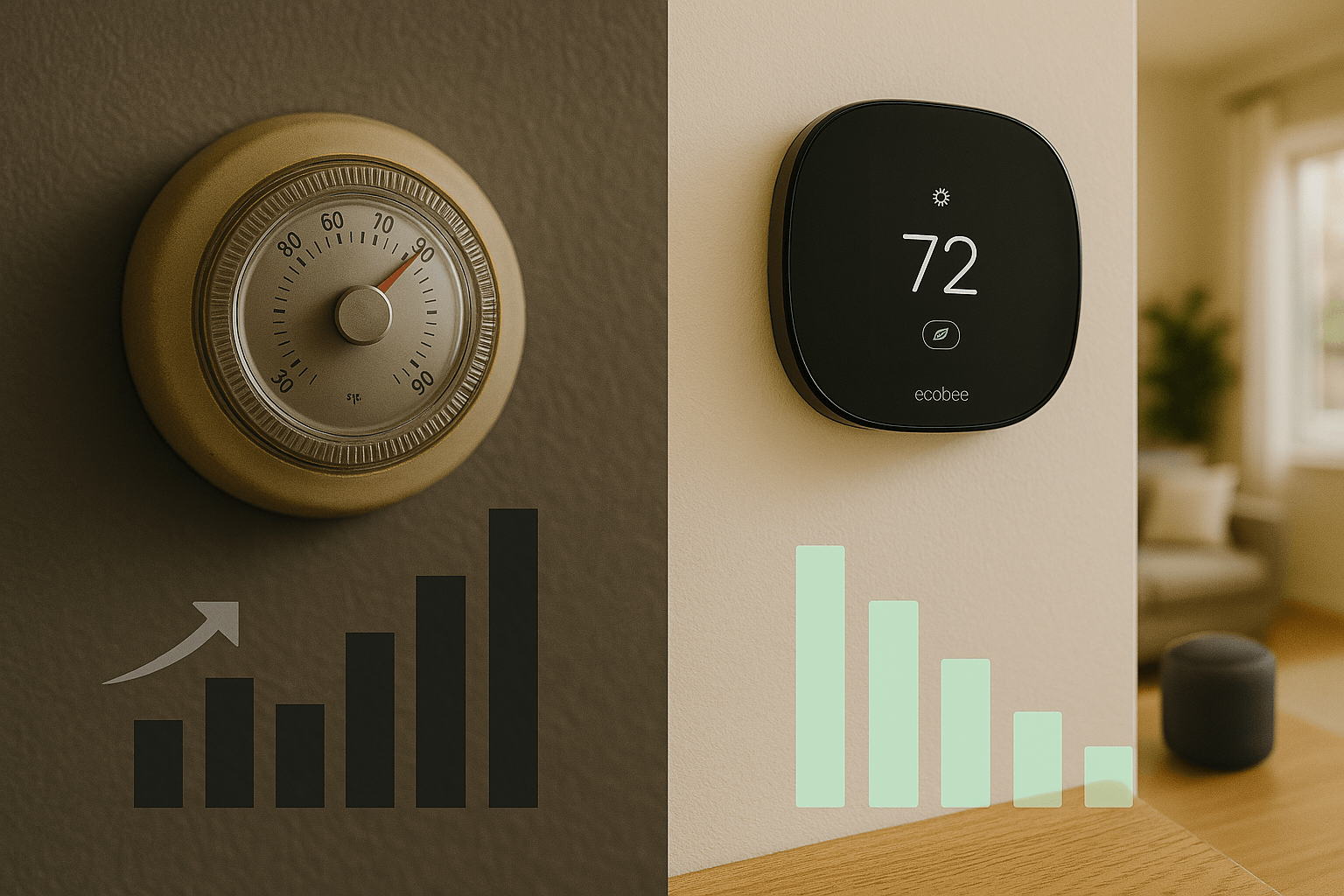
During our testing process, we focused on several key performance factors to determine how each smart thermostat performed in real-world conditions. Our criteria included ease of installation, compatibility with different HVAC systems, app usability, smart home integration, responsiveness, design quality, and energy-saving features. We used a consistent setup across testing environments to ensure fair comparisons. Each thermostat was evaluated for intuitive controls, connectivity stability, and how well it adapted to changing schedules and temperatures over time.
We selected these best products based on how effectively they addressed common user needs while offering unique advantages. For example, models that simplified scheduling and allowed precise temperature control through reliable apps scored higher. Devices with adaptive learning, room sensors, or seamless integration with voice assistants stood out for offering smarter automation. A strong emphasis was also placed on long-term usability—units with clean designs, durable builds, and strong manufacturer support were prioritized. Every product we reviewed earned its place by meeting our high standards and delivering clear value for homeowners. Whether you're upgrading an older unit or creating a connected smart home, our selections represent top-tier choices with real-life advantages confirmed by hands-on testing.
Price vs. Performance Comparison
During our evaluation, we focused on real-world efficiency, smart features, and overall value for each thermostat provided at its price point. Our goal was to identify products that offer the best balance of affordability and high performance.
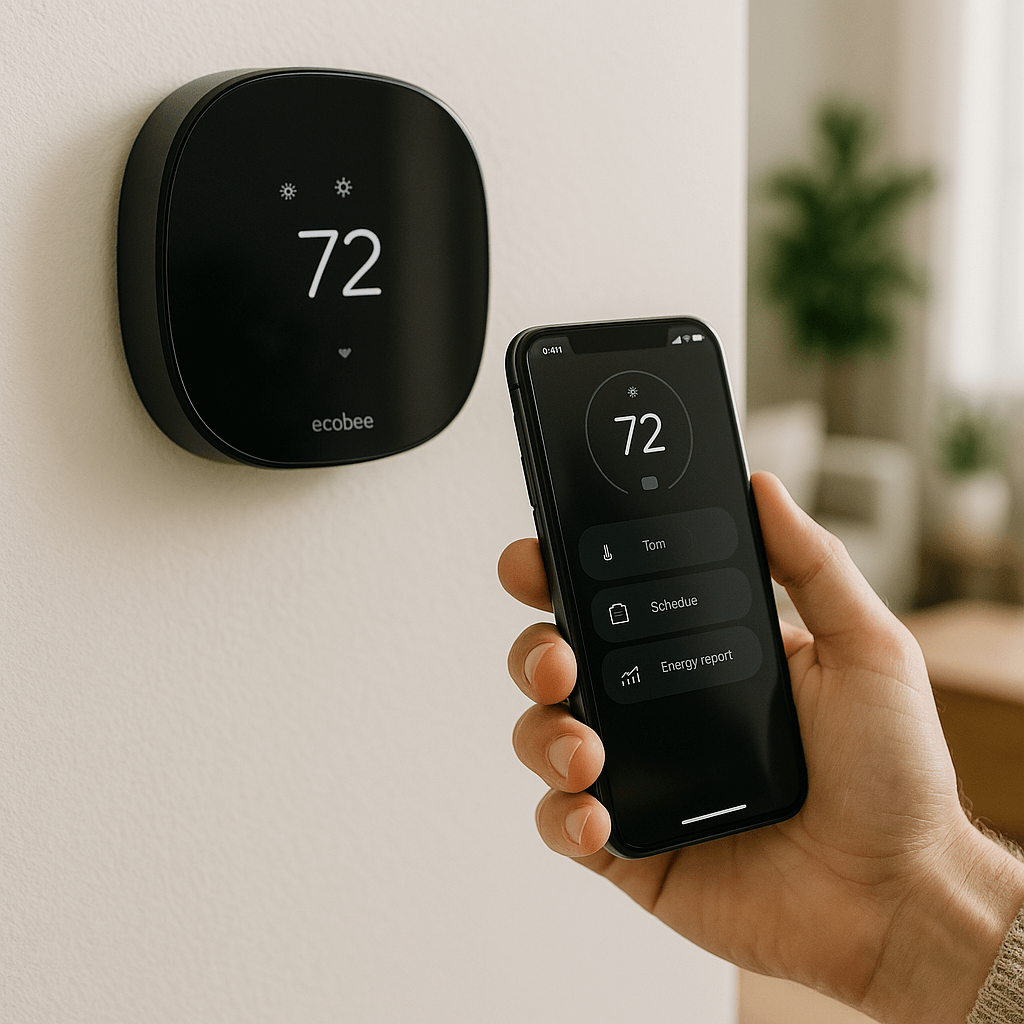
The Ecobee Smart Thermostat stood out with advanced features like built-in Alexa, room sensors, and eco-friendly programming. Our tester noted that it delivers premium features without the premium price.
The Amazon Smart Thermostat impressed with its simplicity and integration at a budget-friendly price. Our tester remarked, It’s the most cost-effective way to enter smart climate control.
The Google Nest Learning Thermostat offered top-tier automation and elegant design. Our tester said, This one feels like the future—effortless learning with sleek style.
Installation Ease
We focused on evaluating the real-world Installation Ease of each thermostat by simulating the typical user experience. Our testing began with removing an existing unit and installing the new one using basic tools such as screwdrivers and a voltage tester. We paid close attention to the clarity and accuracy of the instruction manual, how intuitive the mobile app setup was, and whether the product required a common wire (C-wire). We also considered the compatibility with different HVAC systems, especially older setups, and monitored how each device handled potential errors during installation. To provide the most helpful feedback, we tested on both first-time installations and replacements in older homes. Safety, time-to-install, and user confidence during the setup process were key factors in our review.
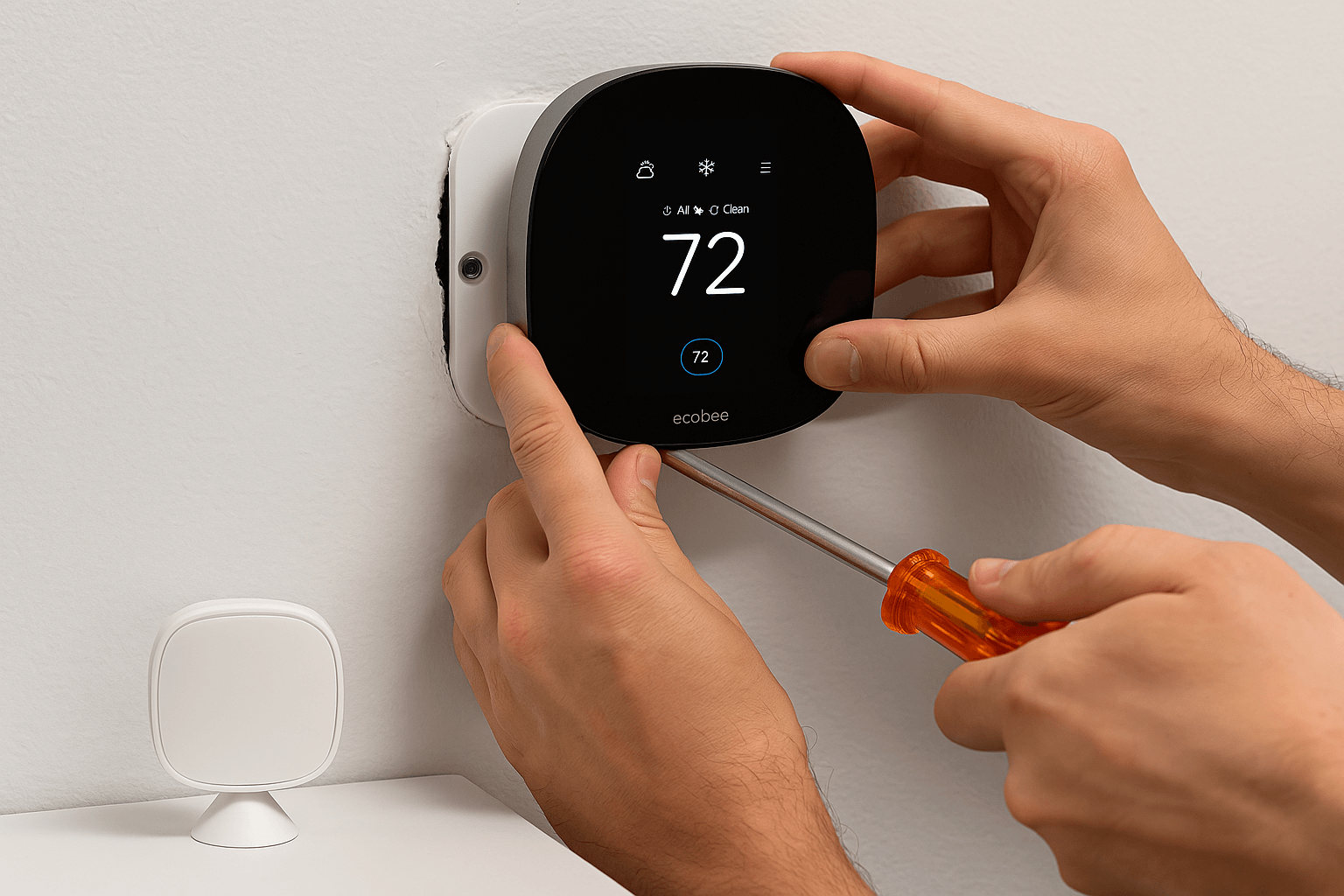
The Ecobee Smart Thermostat ranked high for its user-friendly installation experience. The manual provided clear illustrations and practical steps. The mobile app guided us seamlessly from wiring to Wi-Fi pairing.
Our tester commented, It felt like Ecobee thought of everything—great visuals, reliable hardware, and fast setup even without prior experience.
The Sensi Touch 2 Smart Thermostat also impressed us with its straightforward setup. Its compatibility with systems that lack a C-wire made it stand out, especially in older homes. The touchscreen interface simplified configuration once installed.
Our tester remarked that Sensi made this easy. The step-by-step app instructions felt tailored for beginners, and I didn’t need to call support once.
We found that the Amazon Smart Thermostat and Google Nest Learning Thermostat offered very different experiences. Amazon’s model was incredibly quick to install, especially for users already in the Alexa ecosystem. The design was minimal, and the app auto-detected most wiring setups.
Our tester noted, The Amazon install was done in under 30 minutes. It’s perfect for renters or budget-focused buyers.
The Google Nest Learning Thermostat, while more premium, required more attention to detail. It often needed a C-wire or a power adapter and involved a few more steps than the others. However, the in-app guidance and smart compatibility checker smoothed out the process.
Our tester said that Nest took longer, but every detail was polished. If you can follow instructions, you’ll appreciate the precision.
App Usability
We focused on testing App Usability by evaluating each thermostat's companion app on both Android and iOS platforms. We paid close attention to how intuitive the design was, how quickly users could connect the thermostat to the app, and how easily they could perform everyday tasks—like adjusting temperatures, creating custom schedules, reviewing energy usage, and using smart features like geofencing.
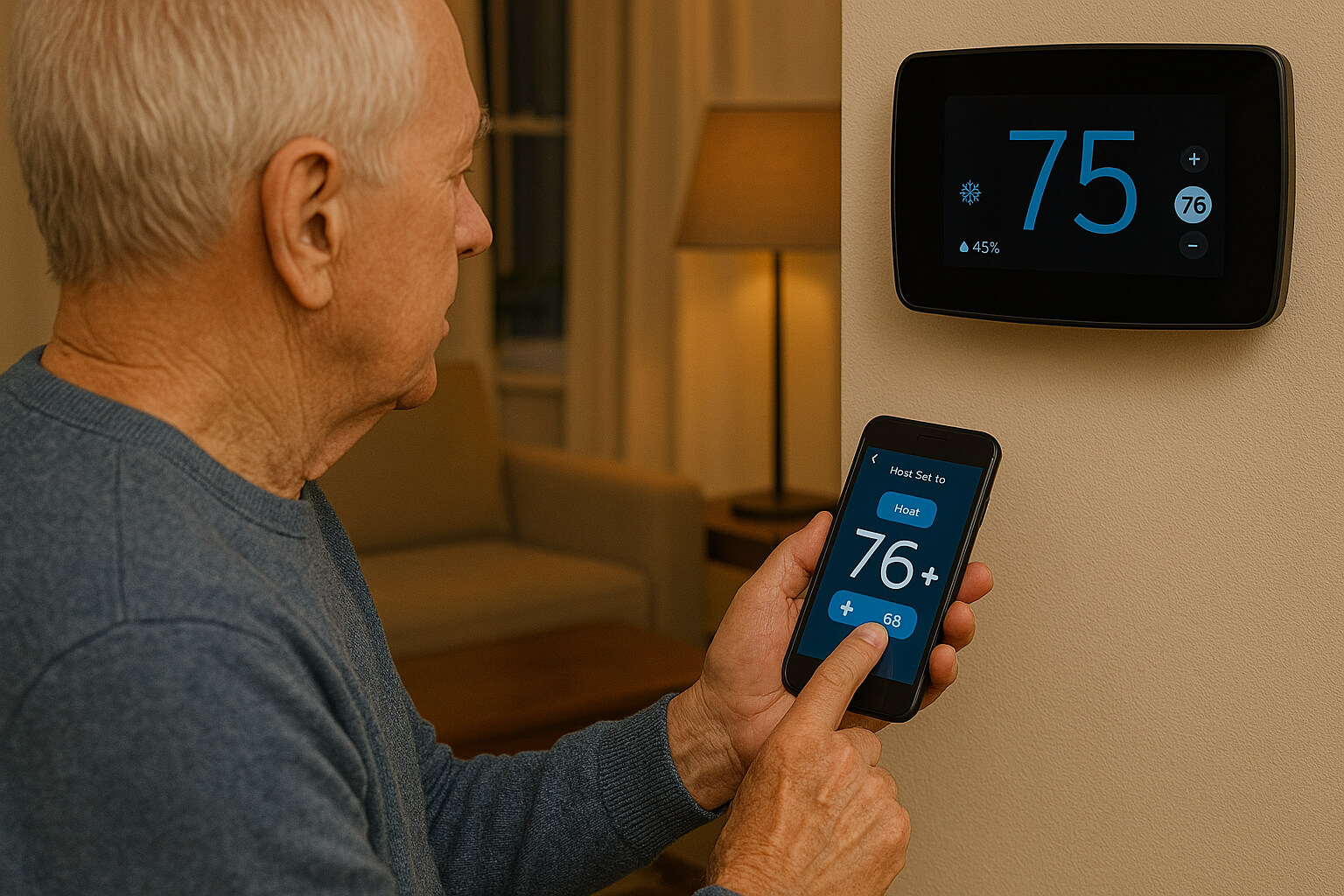
We also looked at onboarding experiences, tutorials, real-time responsiveness, load times, and how quickly the app reflected changes made remotely. Integration with other smart devices, account setup simplicity, and the number of taps required to complete key actions were all essential factors during testing.
The Google Nest Learning Thermostat and Ecobee Smart Thermostat stood out for delivering an exceptional app experience. Nest’s app was highly responsive, well-organized, and made remote control seamless with its clean visuals and smart learning insights. Ecobee’s app offered more customization for schedules and better visual access to energy savings reports.
Our tester noted that Nest’s app was the most polished and responsive during testing, while Ecobee offered deeper control with a dashboard that’s easy to understand at a glance.
Both the Vine Smart Thermostat and Breez Max Thermostat surprised us with their app quality. Vine’s app was simple and functional, particularly effective for quick scheduling and temperature changes. Breez Max impressed with how fast it connected to Wi-Fi and how easily it worked with Alexa and Google Assistant.
Our tester said, These budget-friendly apps performed beyond expectations. Vine’s interface felt modern, and Breez Max had the smoothest smart assistant integration of all mid-range models we tested.
The Amazon Smart Thermostat app, while functional, was minimalistic in both design and feature set. It integrates directly into the Alexa app, which can be convenient for existing Amazon users but may feel limited compared to standalone apps. Some key features like schedule creation or energy reports were buried under multiple menu layers.
Our tester commented, For basic users or Alexa fans, the Amazon thermostat app works. But it’s not the best if you’re seeking full-featured control or an advanced UI.
Smart Features
We focused our testing on how well each thermostat utilized smart capabilities to improve user comfort, energy savings, and automation. This involved evaluating features like learning algorithms, geofencing, occupancy sensing, adaptive scheduling, weather-based responses, and integration with broader smart home ecosystems.
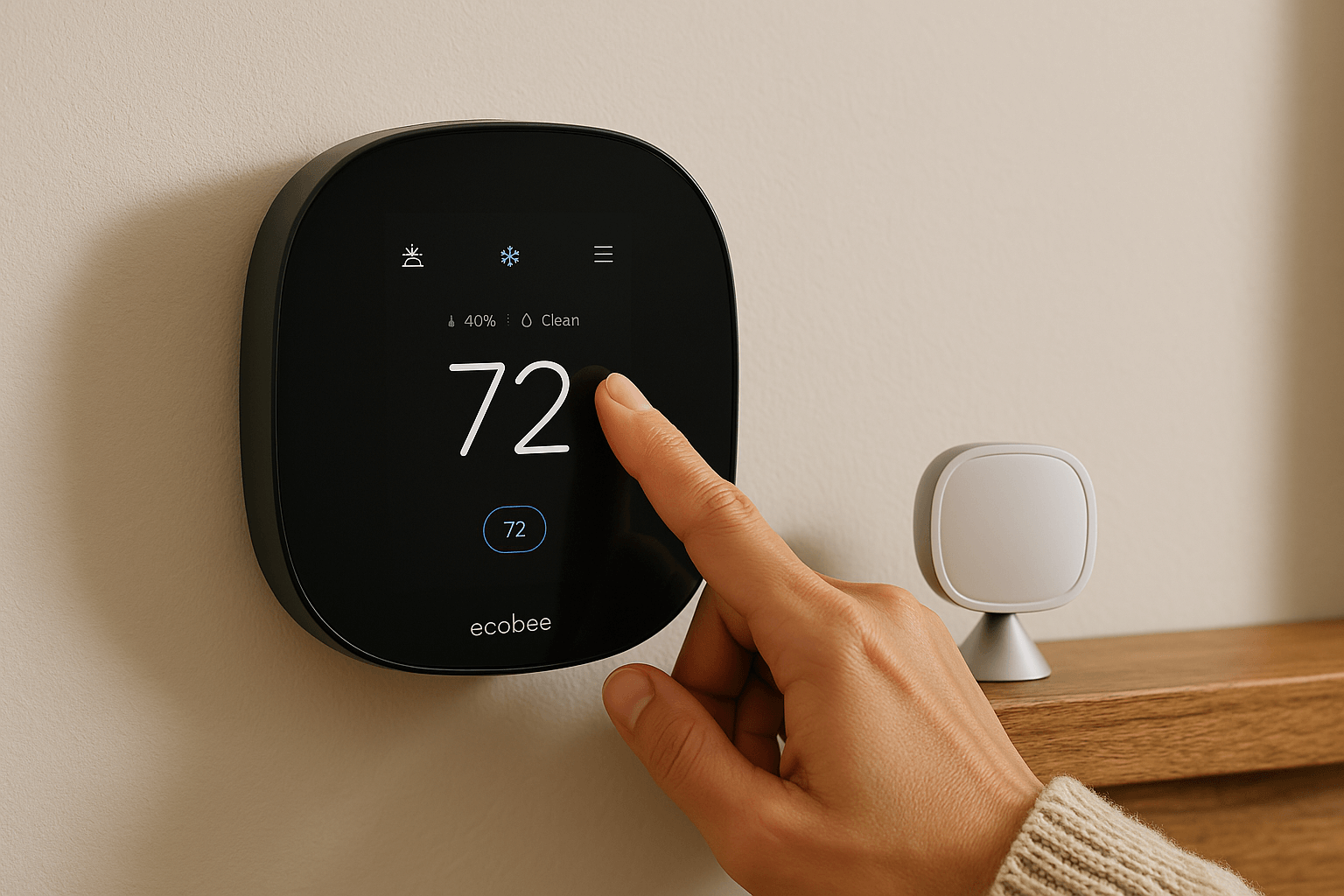
We tested real-world scenarios such as changes in daily routines, unexpected departures, and sleep cycle shifts to see how intelligently each thermostat responded without manual adjustments. We also examined how well each device integrated with platforms like Alexa, Google Assistant, Siri, SmartThings, and IFTTT, and how responsive they were to voice commands, automations, and environmental data.
The Ecobee Smart Thermostat and Sensi Touch 2 Smart Thermostat delivered strong smart performance across the board. Ecobee impressed us with its room sensor technology and reliable occupancy detection, which allowed for intelligent temperature adjustments depending on which areas were in use. The weather-adaptive scheduling and geofencing also worked smoothly, adjusting comfort levels automatically.
Our tester noted that Ecobee felt like a true smart assistant—it responded to our routine changes quickly and consistently, without needing to be micromanaged. Sensi Touch 2 offered streamlined smart home compatibility, working well with Alexa and Apple HomeKit. Its scheduling automation, though not as advanced as Ecobee’s, was still reliable and easy to customize.
The Google Nest Learning Thermostat was one of the most autonomous devices we tested. Its ability to learn and adapt to user behavior over time without requiring manual input stood out. Within a few days, Nest began making schedule suggestions and adjusting settings based on our usage trends, presence detection, and environmental factors. Integration with Google Assistant and other smart platforms felt seamless.
Our tester said, Nest was the most intuitive—it truly ‘learned’ us. We hardly had to touch it once setup was done. Its smart energy reports and eco-mode further added to its intelligent appeal.
The Vine Smart Thermostat had fewer features but still offered a solid smart experience, especially for a budget-friendly option. It handled voice commands through Alexa efficiently and supported basic geofencing and scheduling. While it lacked more advanced learning algorithms or robust integrations with third-party platforms, it still adapted to routine settings with decent responsiveness.
Our tester mentioned that for a lower-cost device, Vine handled smart features reasonably well. It doesn’t have all the bells and whistles, but what it offers works dependably.
Smart Home Compatibility
When testing for Smart Home Compatibility, we focused on how well each thermostat integrated into a modern connected home. We assessed compatibility with leading platforms such as Amazon Alexa, Google Assistant, Apple HomeKit, SmartThings, and IFTTT. Our evaluation included setup and pairing simplicity, voice command reliability, and the ability to function smoothly within automated routines involving other smart devices like door sensors, lights, and motion detectors. We also tested for firmware stability, multi-device coordination, and consistent cross-platform performance. The goal was to find thermostats that don’t just work alone but enhance the entire smart home experience through seamless interaction.
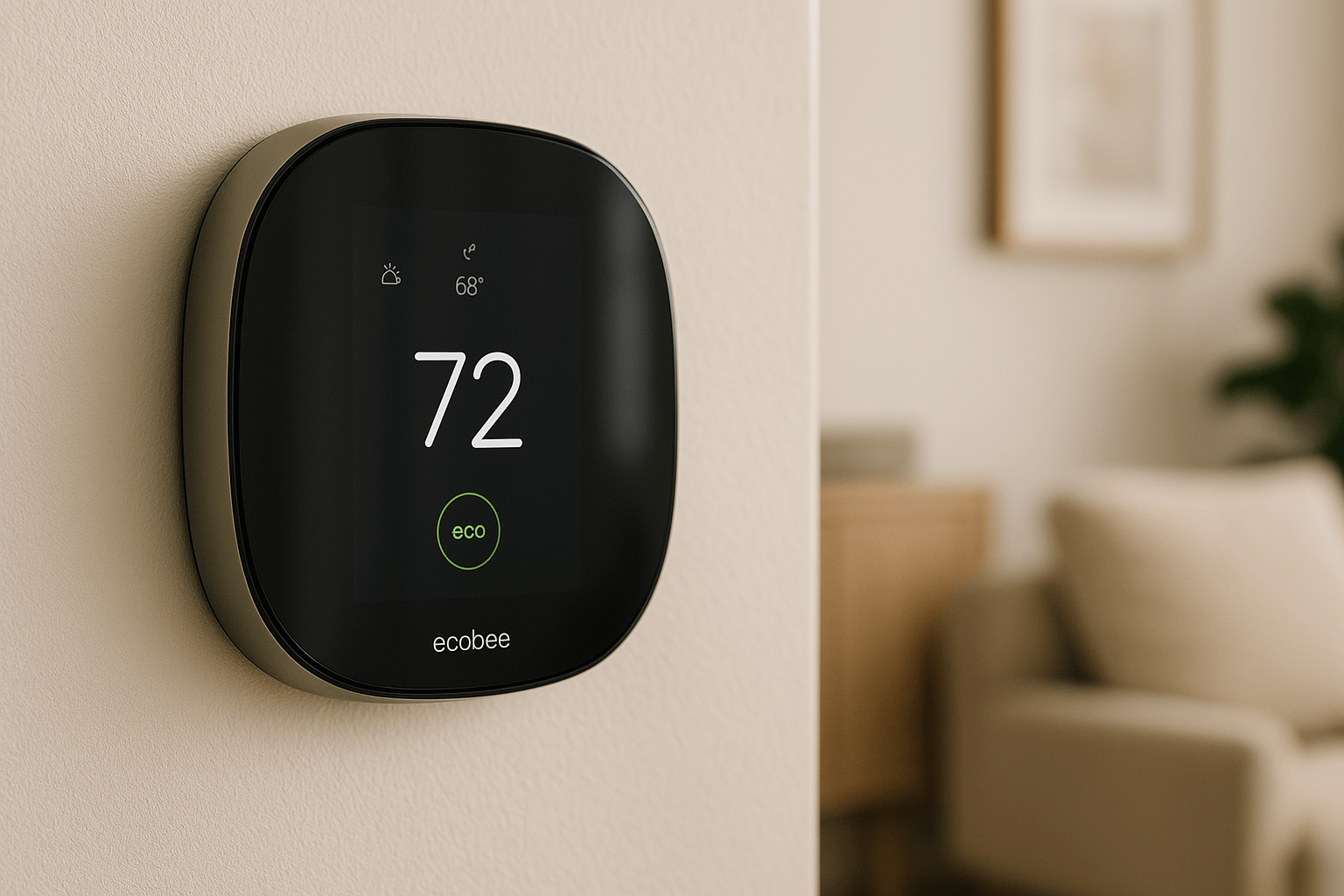
The Ecobee Smart Thermostat was a standout in this category due to its exceptionally broad and stable smart home integration. It worked flawlessly with Alexa, Google Assistant, Apple HomeKit, and SmartThings. Setup was straightforward, and voice commands were processed with zero lag. Ecobee’s ability to sync with additional devices—like security systems and door sensors—made it especially useful in complex routines. For instance, when motion was detected in the morning, the thermostat adjusted to a comfortable temperature while simultaneously triggering smart lights.
Our tester commented that Ecobee blended into our smart home like it was always part of it—every command was instant and every automation felt natural.
The Google Nest Learning Thermostat also delivered excellent compatibility, particularly within the Google ecosystem. It performed exceptionally well with Google Assistant and integrated smoothly with Nest-compatible products like cameras and sensors. Setup was quick, and voice commands were consistently recognized. It also offered basic support for Alexa and IFTTT, though it didn’t support Apple HomeKit, which could be limiting for Apple users. Still, its smart automation through Google Home was advanced and intuitive.
Our tester said that Nest feels like it was made for a Google-centric home. Everything worked fluidly, and voice control was spot-on every time.
The Sensi Touch 2 Smart Thermostat proved itself to be a strong contender with reliable support for Alexa, Google Assistant, and Apple HomeKit. It lacked integration with SmartThings and IFTTT, but within its supported platforms, it worked extremely well. The pairing process was smooth and required minimal input, and once connected, it responded quickly to voice and app-based triggers. We successfully created simple routines such as lowering the temperature when smart blinds closed or raising it when the garage door opened.
Our tester noted that Sensi Touch 2 may not support everything, but what it does support, it does very well. We had no issues across Alexa and HomeKit.
Energy Savings
For our Energy Savings evaluation, we focused on how effectively each smart thermostat helped reduce energy consumption without sacrificing comfort. Our testing involved analyzing real-world usage patterns before and after installation, measuring HVAC runtime durations, and comparing monthly energy bills. We examined features like learning behavior, geofencing, occupancy sensing, and adaptive scheduling. We also noted how well each thermostat responded to manual overrides, seasonal changes, and lifestyle shifts. Integration with energy usage reports and compatibility with local utility rebate programs were key indicators. Our aim was to determine whether the thermostat could intelligently lower energy use while maintaining a consistently comfortable environment.
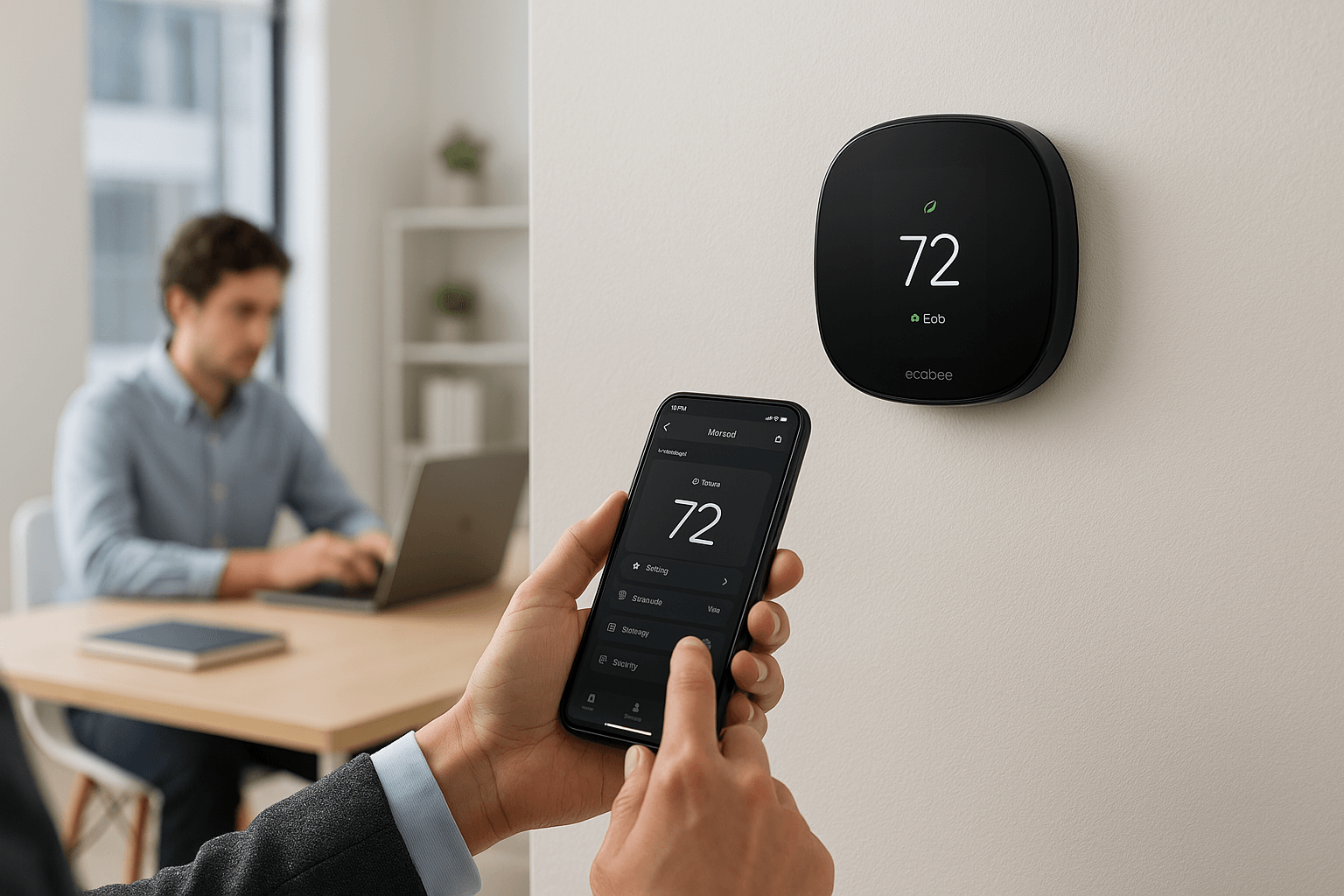
The Ecobee Smart Thermostat delivered strong results due to its adaptive learning system and reliable occupancy detection powered by remote sensors. It proactively adjusted temperatures when rooms were unoccupied, especially during weekdays. Ecobee’s Energy Reports offered transparent insights, and it integrated with utility rebate programs in several states. These tools combined to help users make informed decisions on settings for long-term savings. Its performance remained consistent across seasons, and manual overrides did not disrupt its learning algorithm.
Our tester shared that Ecobee quickly figured out our daily rhythm and adjusted the temps at just the right times—we saw a noticeable dip in our bills after a month.
The Google Nest Learning Thermostat impressed us with its powerful automation and ability to fine-tune energy usage based on learned behavior. It picked up on preferences like when we were most likely to leave the house or go to bed and adjusted temperature settings accordingly. The Home/Away Assist feature, combined with geofencing, reduced HVAC use significantly. It also supports energy history tracking and integrates directly with Google’s energy-saving programs.
Our tester said that Nest made saving energy effortless. It took control without us needing to adjust anything manually, and the reports were easy to understand and actually useful.
The Amazon Smart Thermostat stood out for its simplicity and affordability while still delivering meaningful energy savings. Though it lacks some of the advanced learning capabilities of its premium counterparts, it excels in basic scheduling, geofencing, and Alexa integration. Amazon’s thermostat was especially effective when paired with routines, adjusting temperatures when users left home or returned. Its Energy Dashboard in the Alexa app helped track performance week over week.
Our tester noted, For its price, Amazon’s thermostat did more than we expected. It was easy to program and started cutting down our energy usage almost immediately.
Design & Build
When testing for Design & Build, we focused on the physical construction, visual appeal, display clarity, and how well each smart thermostat blended into modern and traditional home interiors. We carefully examined the durability of the materials, the quality of the screen under different lighting conditions, and the ease of interaction through buttons or touch controls. We also considered how secure and clean the wiring and mounting felt after installation. A good thermostat should not only look modern and feel premium, but also make installation and daily use intuitive and seamless.
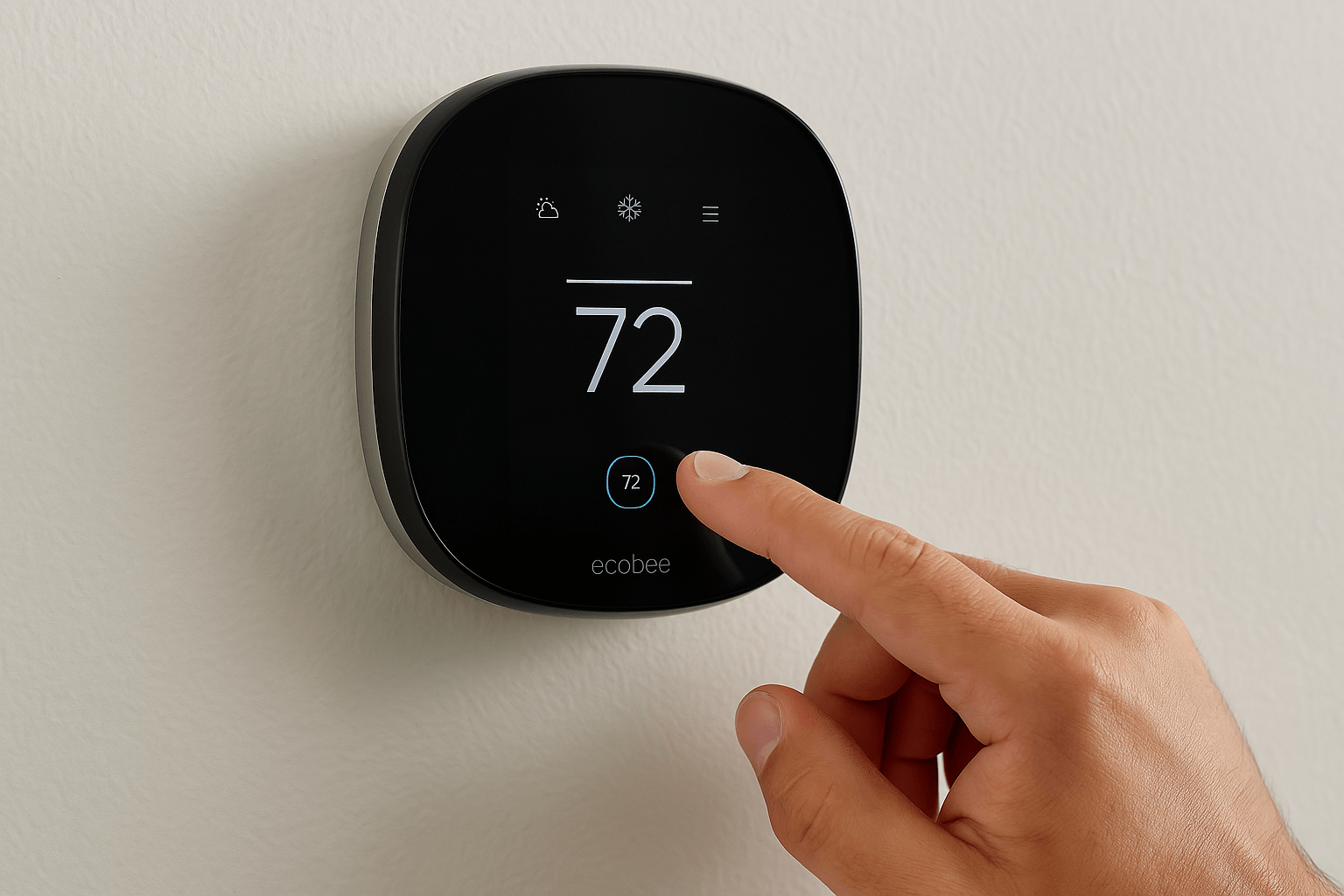
The Breez Max Thermostat and Ecobee Smart Thermostat stood out for their sleek, refined design and sturdy construction. Both thermostats feature crisp displays that remain legible from various angles, even in low-light conditions. The Ecobee has a glass finish and premium casing that makes it feel more like a smart device than a traditional thermostat, while the Breez Max offers a bold aesthetic with a large screen and a responsive interface. Their touch controls were intuitive and precise, and the build quality reflected durability that could hold up over years of daily use.
Our tester noted, The Ecobee and Breez Max both felt high-end. Their finishes and screens gave them a polished look, and setup felt clean with no visible clutter.
The vine Smart Thermostat impressed us with its minimalist aesthetic and compact form. Though smaller than many of its competitors, it delivered an elegant presence on the wall. The casing, while lightweight, felt solid and well-assembled. The screen was sharp and bright, making it easy to read at different times of day. Its capacitive buttons are well-placed and responsive. We found installation to be straightforward, and the wiring area was cleanly organized to support a tidy mount.
Our tester shared, The vine thermostat surprised me. It doesn’t try to be flashy, but it looks sharp and works well. Everything clicked into place during setup.
The Amazon Smart Thermostat was another strong contender in this category due to its clean, functional design and ease of use. The thermostat features a simple front panel with touch-sensitive controls and a monochrome LED display. While it may not offer the vibrant screen or bold look of premium models, its minimalist design makes it blend effortlessly into different environments. The casing feels solid, and its flush mount leaves no gaps or visible wiring, contributing to a neat appearance.
Our tester commented that it’s not trying to be fancy, but that’s what makes the Amazon Smart Thermostat so appealing. It fits in everywhere and just works.
Conclusion
So, guys, if you value energy efficiency, intuitive design, and long-term reliability, you will appreciate the performance of these smart thermostats. They offer practical features that blend with daily routines and save energy. They fit well into modern homes and provide comfort without constant adjustments. You will find them easy to use.
Meet Your Guide

Emily Park
Emily Park is a product tester and reviewer at Go Soundproof, where she specializes in evaluating home improvement and soundproofing products. She conducts hands-on tests, writes detailed reviews, and provides product ratings to help consumers make informed purchasing decisions. Her expertise ensure...

Go Soundproof Team
The Go Soundproof Team is a group of soundproofing enthusiasts and product testers dedicated to helping you create quieter, more peaceful spaces. We review and test the latest quiet appliances and noise-reducing solutions to provide honest, expert advice you can trust.